

Electric showers, heat pumps and whole-home efficiency: Separating myth from reality
As the UK moves towards Net Z, hot water, showers and energy efficiency are coming under greater scrutiny. With the Warm Homes Plan and EPC reforms approaching, the focus is shifting from theoretical efficiency to how systems perform in real life.
At the heart of the debate is a simple point: efficiency isn’t about individual products, but how the whole system works together. That includes heat sources, hot water storage, pipework and how water is actually used at the point of delivery.

Why hot water matters more than ever
Heating and hot water make up a large share of household energy use, particularly in homes with heat pumps and hot water cylinders. From a policy perspective, hot water is now firmly in focus because it represents a predictable, everyday energy demand that directly affects bills and carbon emissions.
As EPCs evolve to reflect real-world performance rather than modelled assumptions, hot water use is no longer a blind spot. Reducing demand at source is becoming just as important as specifying efficient heating technologies, supporting wider goals around decarbonisation, affordability and long-term sustainability.

Why hot water demand matters in real homes
In practice, hot water systems are often designed as if people shower one at a time, for short and predictable periods. Real homes rarely behave that way. Showers run longer, people shower back-to-back, and in busy households, demand quickly adds up.
When several outlets draw on stored hot water in a short space of time, supplies can run low. The result is familiar: the first shower is fine, the next may be lukewarm, and the last person is left disappointed. This isn’t a system failure; it’s a demand issue. Using less hot water per shower helps supplies last longer, keeps temperatures stable, and reduces the energy needed to reheat the cylinder.
Myth vs reality: Electric showers and efficiency
Reality: Electric showers bypass the home’s central hot water system entirely. If a property has invested in a heat pump and hot water cylinder, an electric shower ignores that efficient heat source and instead relies on a separate, high-load electric heater. This fragments the system rather than optimising it.

What installers and specifiers should consider
For installers, housebuilders and retrofit professionals, the direction of travel is clear:
- demand reduction comes first
- systems must be designed as an integrated whole
- user behaviour and experience matter
Water efficiency at the point of use is one of the most practical ways to reduce hot water demand without major disruption to the building fabric or heating system.
Where water-efficient mixer showers fit in
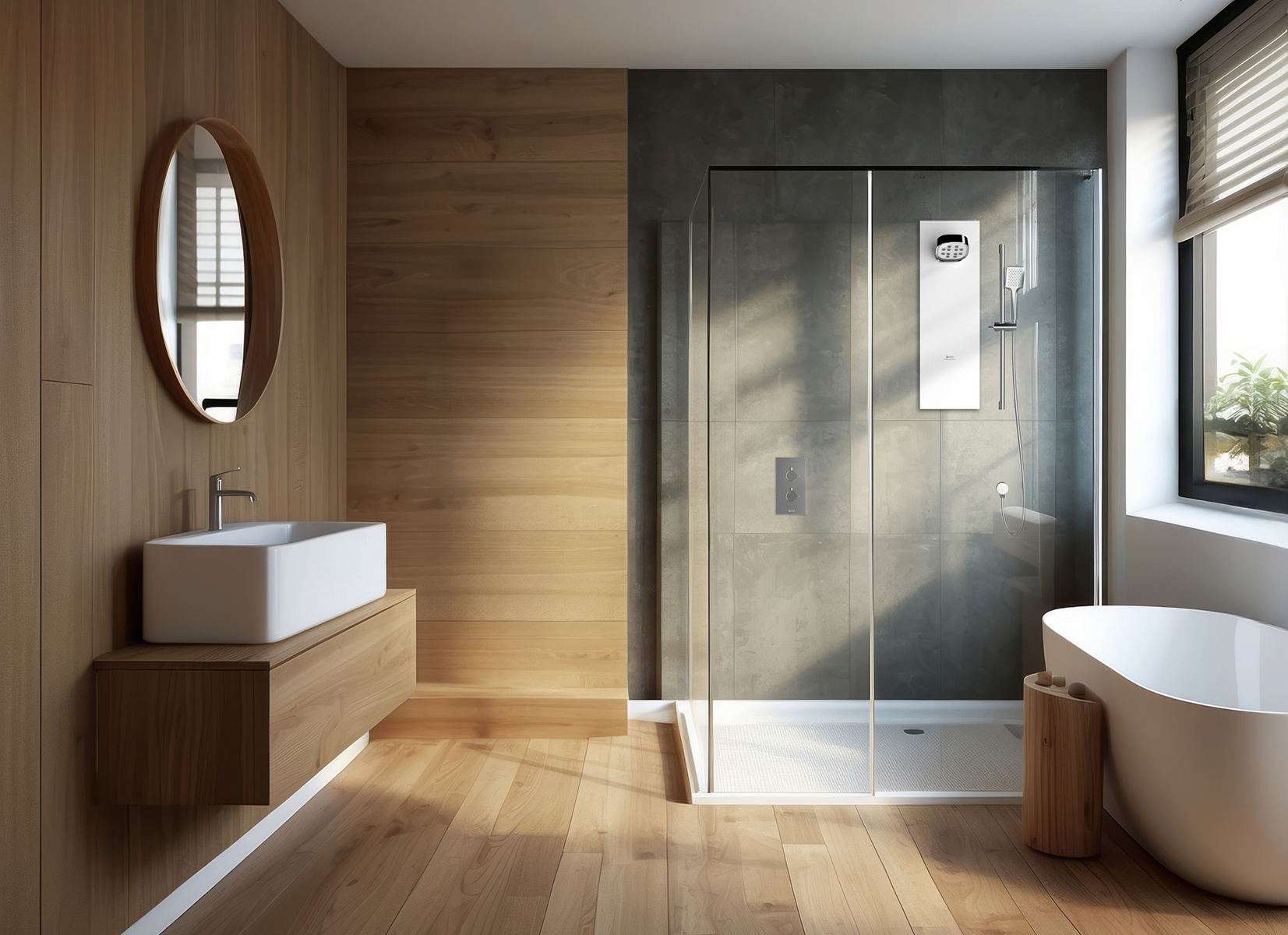
Mixer showers connected to a heat pump-driven hot water system use energy that has already been generated efficiently. When paired with genuinely water-efficient technology, they reduce both water and energy demand without introducing competing systems.
This is where water efficiency and performance must go hand in hand. A shower that feels weak will not deliver savings in practice. A shower that maintains a strong, satisfying experience while using less hot water will.
How Kelda approaches the problem
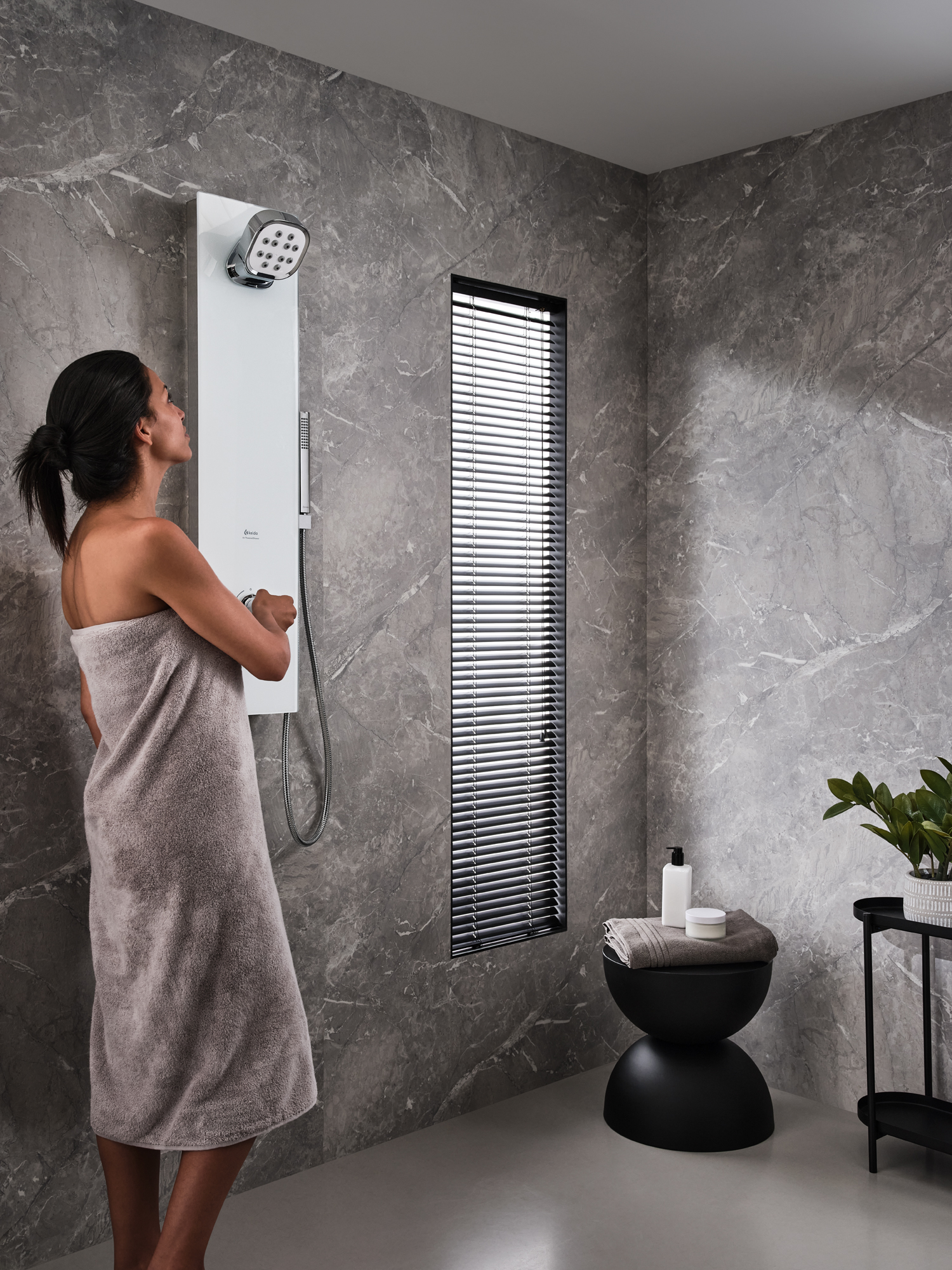
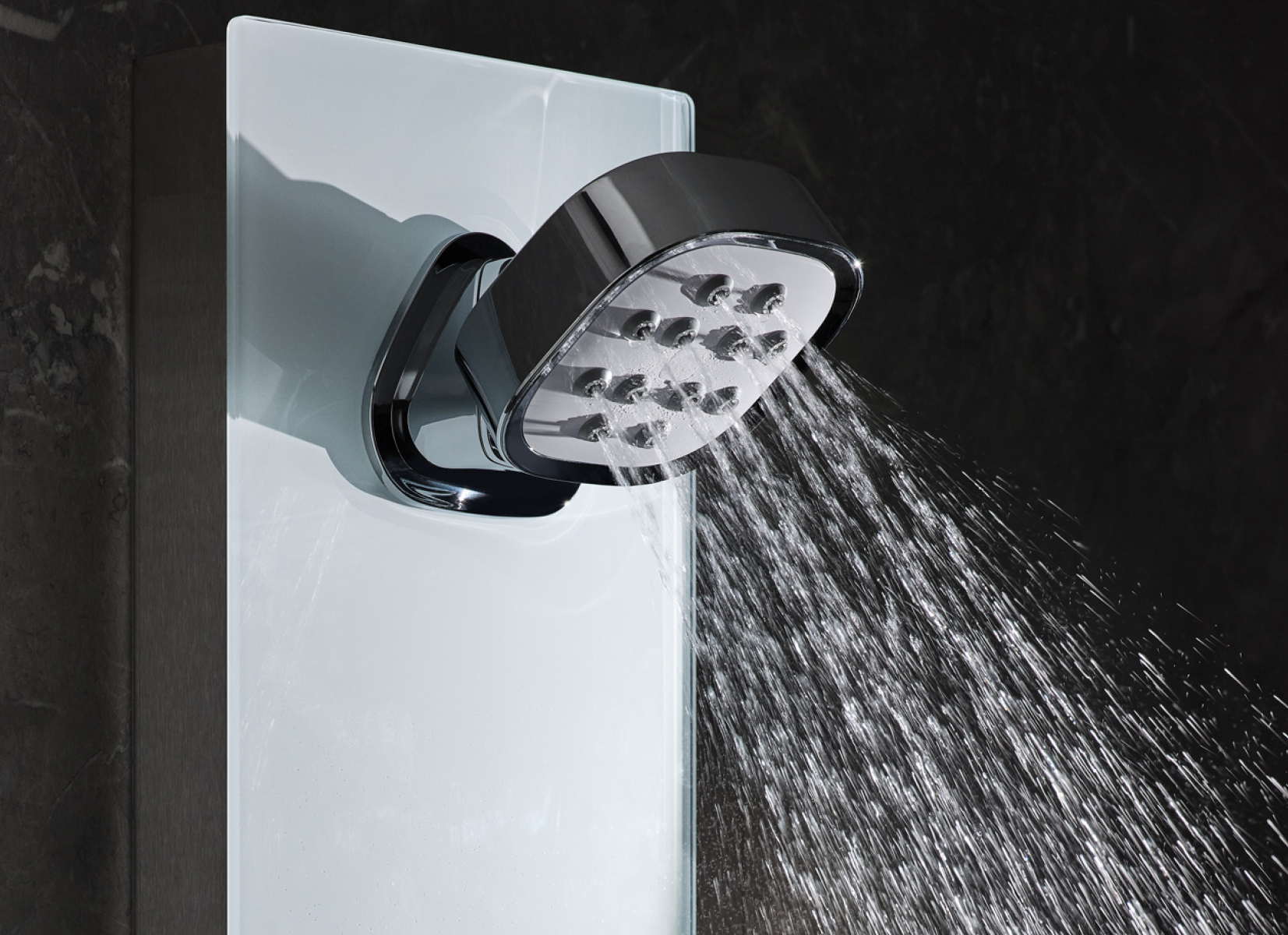
Kelda’s Air-Powered™ showers are designed to reduce hot water demand at source, where energy use is most consistent and hardest to avoid. By infusing water with air, Kelda creates millions of micro-droplets that deliver heat and coverage more effectively than a conventional shower.
A typical UK shower uses around 9–12 litres of water per minute, meaning hot water demand can build up quickly, particularly in homes with multiple users or stored hot water systems. Kelda’s technology maintains the same pressure and shower experience at significantly lower flow rates, operating effectively at as little as 4.5 litres per minute, without compromising comfort or performance.
This allows Kelda showers to:
- – reduce water, energy and carbon use by up to 55%
- – significantly cut hot water energy demand
- – maintain a powerful, high-quality shower experience at reduced flow
Because showers are one of the most consistent daily energy loads in a building, reducing demand at this point has a meaningful impact on running costs, carbon emissions and overall system performance, particularly in homes using heat pumps.
Designed to work with the whole system
Kelda showers are designed to work seamlessly with any air source heat pump, stored hot water cylinder and waste water heat recovery system, supporting whole-home efficiency rather than competing with it.
When paired with technologies such as ShowerSave WWHRS, the energy recovered from shower waste water further reduces the energy required to reheat hot water. In these installations, total energy savings can increase from 55% to up to 86%, significantly improving overall system efficiency.
Similarly, when used alongside smart hot water cylinders such as Mixergy, Kelda showers help reduce both water and energy demand, allowing stored hot water to last longer, recover more efficiently and perform more consistently during periods of high use.
Rather than bypassing efficient heating systems, Kelda showers enhance them, helping integrated low-carbon homes deliver better performance, lower running costs and a more reliable everyday experience.
In summary
- The UK is moving towards whole-home energy performance, with EPC reform placing greater emphasis on real-world energy use and running costs
- Hot water demand, particularly from showers, is a major and consistent driver of household energy use
- Efficient heating systems perform best when water demand is reduced at the source, not bypassed or fragmented
- Kelda’s Air-Powered™ showers reduce water, energy and carbon use by up to 55% while maintaining a powerful, high-quality shower experience
- When combined with technologies such as waste water heat recovery and smart hot water storage, Kelda’s total energy savings can increase by up to 86%
- By working with heat pumps and stored hot water systems, Kelda showers support more reliable performance, lower bills and future-ready low-carbon homes
Discover how Kelda Air-Powered™ showers can reduce your hot water demand while delivering a full-pressure shower experience.
Related Links

Kelda Showers are recognised within Appendix Q of the UK governments SAP and RdSAP
Find Out More
How Kelda Showers is transforming home living with advanced water-efficient shower systems
Find Out More